
What Are the 2026 Top Bed Side Cabinet Types?
Choosing the right Bed Side Cabinet in 2026 involves more than matching a bedroom’s color scheme. The cabinet beside your bed supports everyday routines, from charging a phone to storing reading glasses and medication. It also affects walking space, lighting, and nighttime safety. A poorly sized unit can make a narrow room feel crowded, while a low cabinet may leave useful storage awkwardly out of reach.
This guide explores the leading Bed Side Cabinet types expected to shape bedroom furniture choices in 2026. These include floating cabinets, compact drawer units, open-shelf designs, charging cabinets, multifunctional bedside tables, and sustainable wood models. Each type answers a different need. Some suit small apartments. Others provide better organization for larger bedrooms or shared spaces. Materials such as solid wood, engineered timber, metal, and recycled composites offer different levels of durability, maintenance, and visual warmth.
Practical details matter.
A cabinet with smooth runners feels reassuring at midnight. Soft-close doors reduce noise. Rounded corners may improve safety in tight rooms. Built-in USB ports are convenient, but they should not replace careful electrical installation or sensible cable management. Design forecasts can also be imperfect. A fashionable finish may show fingerprints quickly. A minimalist shelf may look elegant but collect dust and expose clutter.
The strongest choice depends on room size, sleeping habits, storage demands, and personal comfort. This overview compares each type through those real-world considerations, helping readers make a more informed and reliable decision.
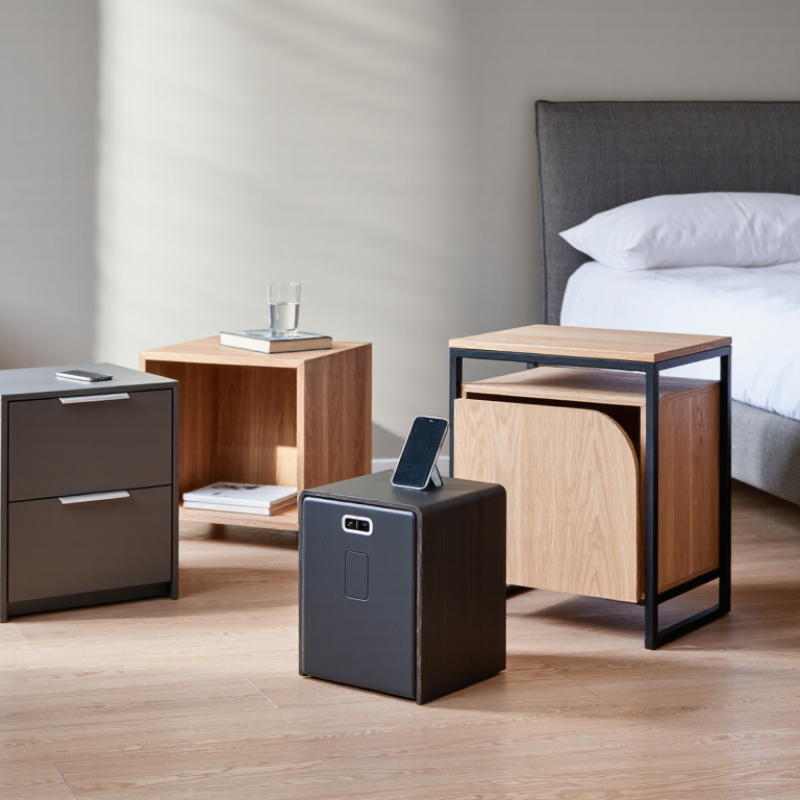
What Defines a Bedside Cabinet in 2026?
In 2026, a bedside cabinet is best defined by its job, not its label: it keeps essentials within reach of the bed. A useful model offers a stable top for a lamp or water, plus storage for items such as glasses, books, or medication. Its height should work with the mattress, so a person can reach the top without stretching. Measure the bed first. A cabinet that looks compact in a showroom may crowd a narrow walkway at home.
The Grand View Research Bedroom Furniture Market report estimated the global market at about US$245.7 billion in 2023, reflecting the scale of a category shaped by changing household needs. That figure covers bedroom furniture broadly, not bedside cabinets alone.
For buyers, the practical distinction is clearer: open shelves make daily items visible, drawers conceal clutter, and wall-mounted units free floor space but need secure installation.
Small details matter. Check drawer clearance, handle comfort, and whether the top stays steady when a lamp is switched on. I still think “more storage” is often treated as an automatic benefit; in a tight room, an oversized cabinet can make the bedside feel harder to use.
Which Bedside Cabinet Types Match Different Bedroom Needs?
A bedside cabinet should solve a real bedroom problem, not merely fill an empty corner. For tight rooms, a wall-mounted shelf or slim, legged table preserves visible floor space and makes vacuuming easier. Keep only a lamp, glasses, and a book within reach. Small surface, less clutter. If medication, chargers, or spare linens need a home, choose a two-drawer cabinet with full-extension runners. Enclosed storage can keep the bedside looking calmer, though drawers become cluttered quickly without occasional editing.
For readers who need easier access, a stable cabinet with a wide top and simple pull handles can be more practical than a floating shelf. AARP’s 2021 Home and Community Preferences Survey found that 77% of adults aged 50 and older want to remain in their homes as long as possible. That preference makes reach, stability, and clear walking space worth considering when choosing bedside furniture. The National Sleep Foundation’s 2011 Sleep in America poll reported that 78% of respondents considered a clean bedroom important for sleep. That supports choosing storage that controls visual mess, but it does not prove a cabinet improves sleep. Soft-close drawers may also reduce nighttime noise. Still, they cannot fix a crowded layout. Measure the bed height and walking clearance before buying; I have seen attractive cabinets feel awkward simply because their tops sit too high.
How Do Materials and Construction Shape Cabinet Performance?
The strongest 2026 bedside cabinet types will balance storage, stability, and easy maintenance. Material choice largely determines that balance. Solid wood offers natural strength and can be repaired after small dents. It may expand in humid rooms, however. Narrow gaps around drawer fronts can prevent sticking.
Engineered wood panels provide consistent dimensions and lower weight. Their performance depends on density, edge sealing, and screw retention. Poorly sealed edges can swell near spilled water. A durable laminate surface helps, but it cannot repair weak internal joints. Metal frames add rigidity and a lighter visual profile. They can feel cold beside a bed. Powder-coated finishes also need careful inspection around corners.
Construction details often matter more than appearance. Full-extension runners improve access to deep drawers. Soft-close hardware reduces impact and noise during late-night use. Reinforced back panels limit wobbling, while adjustable feet help on uneven floors. Wall-mounted cabinets save floor space, but their fixings must match the wall structure and expected load.
Small details matter. In home evaluations, a cabinet may look excellent yet reveal loose handles after repeated use. That is a useful warning. Buyers should check joint alignment, drawer movement, surface sealing, and documented low-emission materials.
Even careful designs have trade-offs. A heavier cabinet usually feels steadier, but moving it becomes harder during cleaning.
What Smart Features Are Found in Modern Bedside Cabinets?
What Are the 2026 Top Bed Side Cabinet Types?
What Smart Features Are Found in Modern Bedside Cabinets?
Modern bedside cabinets increasingly pair familiar storage with practical technology. Wireless charging pads can keep a phone topped up overnight, while built-in USB-C ports handle lamps, watches, or earbuds. Check that the charging surface suits your device and case; thick cases can interrupt charging. Motion-activated floor lighting helps during nighttime trips, especially when it glows softly rather than shining into your eyes. Some cabinets also offer app-controlled lighting or speakers, though these extras may add cost without improving daily use.
Look closely at how the features are fitted. A recessed charging pad is less likely to slide around, and rear cable openings help prevent a tangle against the wall. Ventilation matters when a cabinet holds charging electronics, since enclosed spaces can trap warmth. Soft-close drawers and stable construction still matter; smart functions cannot compensate for a drawer that sticks or a cabinet that wobbles. Showroom appeal can be strong, but home routines are not always so tidy.
Tips: Measure the space beside your bed, then check outlet location and cable reach. Test charging with your usual phone case. Prefer controls you can use in the dark. Keep chargers clear of bedding, and skip features you are unlikely to use.
Modern bedside cabinets may include these features, but availability varies by model. Bars indicate feature categories, not market share or how commonly each feature is offered.
How Can You Choose the Right Bedside Cabinet for Your Space?
The right bedside cabinet starts with the space around your bed, not a style trend. Measure the gap beside the mattress and check how far drawers can open. Leave enough room to walk without turning sideways. A cabinet that looks compact online may feel bulky in a narrow bedroom.
Think about what you reach for at night. A drawer can hide chargers, glasses, and medication, while an open shelf keeps a book within easy reach. Small rooms need restraint. If the cabinet will hold a lamp or a glass of water, choose a stable top with enough surface area. Too many compartments can become clutter, too.
Match the cabinet height to your mattress so a phone or book is easy to reach. For reading in bed, consider whether a lamp will fit without crowding the surface. Check that handles do not catch on bedding, and that the cabinet can sit level on your floor. Solid construction matters. A slightly imperfect fit may still work if the cabinet clears the bed and supports your daily routine. Less can work.