Top 10 Ultrafiltration Systems to Explore at China Import Expo?
The upcoming China Import Expo promises an exciting showcase of Ultrafiltration Systems. As the demand for clean water heightens, ultrafiltration technology stands out. These systems offer efficient solutions for water treatment and purification.
In 2026, potential buyers will explore innovative ultrafiltration systems. With AI-enhanced navigation, attendees can quickly find qualified suppliers. Features like ISO and CE certifications ensure quality. However, some buyers may struggle to identify their specific needs. Understanding the advantages of various ultrafiltration options is crucial.
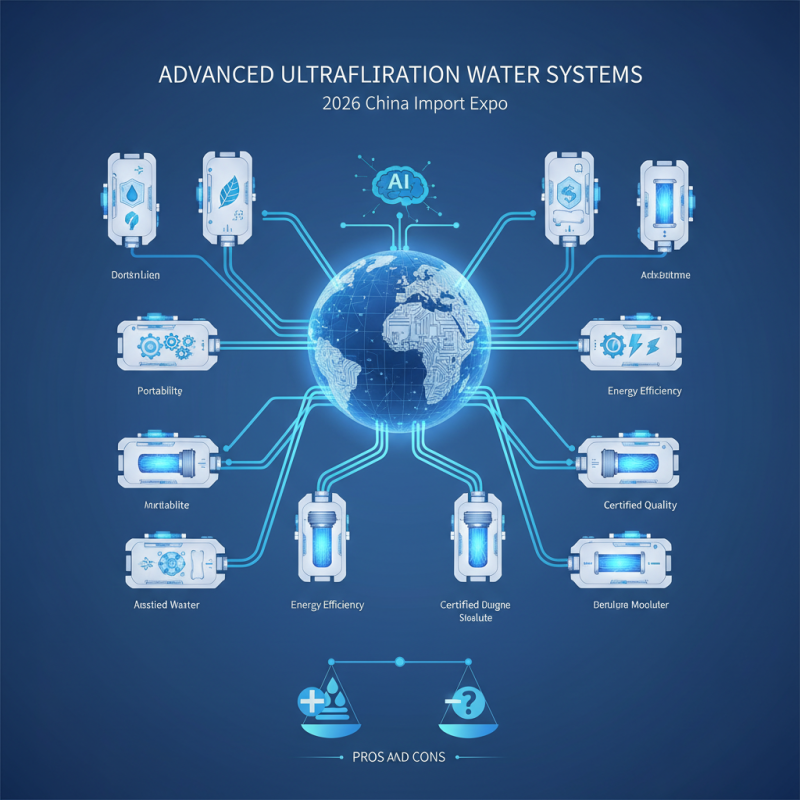
The expo will highlight ten noteworthy ultrafiltration systems. Each system offers unique benefits, from portability to energy efficiency. Still, it is vital to weigh the pros and cons of each technology. These systems could revolutionize water purification, yet they demand careful consideration.
Overview of Ultrafiltration Technology in Water Treatment
Ultrafiltration technology is gaining traction in water treatment. It's an effective method for removing impurities. This process uses membranes with tiny pores to filter out contaminants. These pores are large enough to let water pass through but small enough to trap bacteria and solids.
The benefits of ultrafiltration are notable. It requires less energy compared to traditional methods. In many cases, it can operate at room temperature. However, maintaining system efficiency can be challenging. Membrane fouling is a common problem. Regular cleaning schedules are essential to prevent degradation. This issue needs careful monitoring to ensure optimal performance.
Beyond its application in municipal water systems, ultrafiltration has versatility. Industries use it for treating wastewater and food processing. Some systems also enhance drinking water quality. However, users must consider upfront costs and maintenance. Not every solution fits every need, so exploration is crucial.
Top 10 Ultrafiltration Systems Performance Comparison
This chart displays the performance comparison of the top 10 ultrafiltration systems in terms of water treatment efficiency (measured in liters per hour) and membrane lifespan (measured in years).
Key Advantages of Ultrafiltration Systems in Various Industries
Ultrafiltration systems are gaining traction in various industries. Their key advantage lies in efficiently separating particles from liquids. This technology excels in purifying water by removing bacteria and sediments. Industries benefit from improved product quality and consistency.
In food and beverage, ultrafiltration enhances the clarity of juices and wines. It ensures safety by eliminating pathogens. In pharmaceuticals, it aids in producing sterile solutions. The technology supports compliance with strict regulations too. However, the initial investment can be high.
Another notable advantage is energy efficiency. Ultrafiltration systems typically consume less energy compared to traditional methods. This reduces operational costs over time. Despite these benefits, some users report challenges in membrane fouling. Regular maintenance is essential to sustain performance. Each industry must evaluate both pros and cons carefully.
Criteria for Selecting the Best Ultrafiltration Systems
When selecting the best ultrafiltration systems, a few essential criteria should guide your decision. Efficiency stands out. Look for systems that offer high filtration rates while consuming minimal energy. This improves cost-effectiveness and sustainability. The membrane material is another crucial aspect. Different materials affect durability, cleaning properties, and overall performance.
Consider system size and design as well. Compact systems are often ideal for limited spaces, yet they shouldn’t compromise capacity. Maintenance requirements are often overlooked. Systems that are easy to clean and maintain will save time and resources. Remember, complex designs may be appealing, but they could lead to inefficiencies over time.
Finally, assess the manufacturer’s support options. Reliable customer service can enhance your experience. Make sure they provide resources for troubleshooting and maintenance. Don't shy away from asking tough questions. Reflecting on these criteria can help avoid dissatisfaction with your choice. The right ultrafiltration system should meet both current needs and future demands.
Highlighting Innovative Ultrafiltration Systems at China Import Expo
The China Import Expo showcases innovative ultrafiltration systems that are revolutionizing water treatment. Recent industry reports indicate that the ultrafiltration membrane market is projected to reach $6.3 billion by 2025. This growth stems from increased demand in various sectors, including food and beverage, pharmaceuticals, and industrial applications.
At the expo, visitors can observe how compact and efficient ultrafiltration systems are. These systems can remove particles as small as 0.01 microns, significantly improving water quality. However, the challenge remains in the scalability of these systems. Not all ultrafiltration solutions are suitable for every application. Some may struggle with fouling, leading to increased maintenance costs.
Another aspect worth considering is the energy consumption of ultrafiltration systems. While they offer advanced filtration, energy efficiency is essential. Additionally, the adoption rate of these technologies varies across different regions. Some areas lag behind due to high initial costs and lack of awareness. Exploring these innovations at the expo can inspire solutions to these ongoing challenges, paving the way for future advancements.
Top 10 Ultrafiltration Systems to Explore at China Import Expo
| System Type | Membrane Material | Application | Flow Rate (L/h) | Efficiency |
|---|---|---|---|---|
| Cross-flow Ultrafiltration | Polyethersulfone (PES) | Water Treatment | 1000 | 95% |
| Tubular Ultrafiltration | Polyvinylidene fluoride (PVDF) | Food & Beverage | 800 | 90% |
| Flat Sheet Ultrafiltration | Polyacrylonitrile (PAN) | Wastewater Treatment | 500 | 92% |
| Spiral Wound Ultrafiltration | Cellulose Acetate | Pharmaceuticals | 1200 | 93% |
| Hollow Fiber Ultrafiltration | Polyethylene (PE) | Laboratory | 1500 | 94% |
| Pressure Ultrafiltration | Polymeric Blend | Textile | 900 | 91% |
| Vacuum Ultrafiltration | Polysulfone (PS) | Chemical Processing | 1100 | 89% |
| Batch Ultrafiltration | Polyvinyl chloride (PVC) | Biotechnology | 700 | 87% |
| Integrated Ultrafiltration | Teflon | Oil & Gas | 1300 | 96% |
| Continuous Flow Ultrafiltration | Polypropylene (PP) | Aquaculture | 1600 | 95% |
Future Trends in Ultrafiltration Technology and Applications
Ultrafiltration technology is evolving rapidly. Its applications are expanding across various sectors. From water purification to food processing, its versatility is impressive. Systems are now designed to optimize efficiency and reduce energy consumption. This trend meets the growing demand for sustainable solutions.
In recent years, there has been a noticeable push towards smart ultrafiltration systems. These systems integrate IoT features for better monitoring and control. Real-time data collection helps in making informed decisions. However, the complexity of these systems can pose challenges. Not all operators are equipped to handle advanced technologies effectively. This gap highlights the need for user-friendly interfaces and training.
As we explore ultrafiltration systems at the China Import Expo, it's crucial to consider future trends. Innovations in membrane materials promise higher durability and performance. However, issues like cost and environmental impact need addressing. Striking a balance between technology and sustainability remains a work in progress. There is much to reflect on as the industry advances.