
What Are the Top CNC Tool Manufacturers in China?
China has become a major production base for precision cutting tools, inserts, holders, and complete Cnc Tool systems. Its manufacturers serve automotive, aerospace, mold-making, medical, and general engineering companies worldwide. However, factory scale alone does not prove technical strength. A reliable supplier must combine stable materials, accurate grinding, consistent coatings, and responsive after-sales support.
This guide examines leading Chinese CNC tool manufacturers through practical criteria. These include product range, carbide quality, coating technology, dimensional control, export experience, and application support. It also considers whether a company can provide tool-life testing, inspection reports, and clear technical documentation. Details matter. A well-made end mill should maintain its edge during repeated cuts, not only perform well during a short demonstration. In real workshops, vibration, heat, coolant, and uneven batches quickly expose weaknesses.
The ranking should not be treated as permanent. Market data can change, and some manufacturers disclose more information than others. That creates an unavoidable limitation. Company websites may highlight advanced equipment while offering few independent performance records. Buyers should request samples, verify certifications, inspect tolerances, and compare results under similar cutting conditions. A thoughtful selection process often reveals that the best supplier depends on the machine, material, production volume, and required surface finish. Sometimes, a lesser-known manufacturer provides better support than a famous brand. That possibility deserves attention.
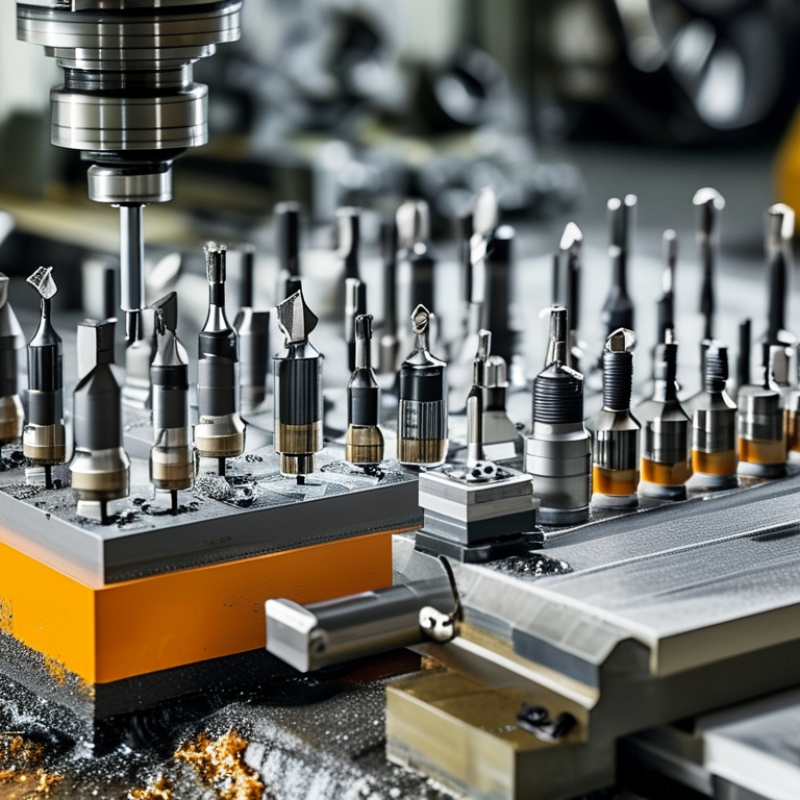
CNC Tool Manufacturing in China: Industry Overview and Development
What Are the Top CNC Tool Manufacturers in China?
CNC tool manufacturing in China has developed from low-cost production into a broad engineering industry. Factories now produce carbide drills, milling cutters, inserts, holders, and custom tooling for automotive, aerospace, medical, and general machining.
Production quality varies considerably. Experienced manufacturers use powder metallurgy, precision grinding, edge preparation, and controlled coating processes. In a factory audit, buyers should inspect raw material records, grinding equipment, coating data, and inspection reports. Small details matter. A dull cutting edge can increase heat, vibration, and scrap rates.
China’s stronger manufacturers increasingly combine automated production with technical support. They test tool life under defined cutting speeds, feeds, and workpiece materials. Reliable suppliers also provide dimensional reports and batch traceability. However, published performance figures may not reflect every workshop. Real results depend on machine rigidity, coolant, operator settings, and material hardness.
The industry is also moving toward digital monitoring and application-specific tooling. Engineers use simulation, sensor data, and custom geometries to improve cycle time. This creates opportunities for smaller specialist factories. Yet development is uneven. Some facilities still depend heavily on manual inspection and inconsistent process control. Buyers should request samples, conduct controlled trials, and compare tool wear before placing larger orders. Price alone remains a weak measure of manufacturing capability.
Key Criteria for Evaluating Chinese CNC Tool Manufacturers
China’s large manufacturing base creates many CNC tool options, but supplier count can mislead. UNIDO’s International Yearbook of Industrial Statistics 2024 reports that China produced about 31% of global manufacturing value added in 2023. That scale supports strong machining capability. It does not guarantee consistent tool quality.
Evaluate technical evidence, not polished catalogs. Request carbide grade, coating composition, edge preparation, runout limits, and inspection records. ISO 13399 supports standardized cutting-tool data exchange, while ISO 9001 certification indicates controlled processes, not perfect performance. Check the certificate scope and audit date carefully. Small details matter.
Ask for sample tools from the same production batch. Test them on your actual material, spindle speed, coolant, and depth of cut. Record tool life, surface finish, vibration, and dimensional drift. A supplier claiming “long life” should provide cutting conditions and measurable results. Independent testing is stronger. Very strong claims deserve doubt.
Production traceability also matters. Confirm batch numbers, inspection frequency, coating thickness control, and corrective-action procedures. The 2023 ISO Survey recorded more than 1.2 million ISO 9001 certificates worldwide, so certification alone cannot separate capable suppliers. Review response time, replacement policy, packaging, and export documentation. Factory visits help, but one visit may show only the best line. Repeated audits are better. Supplier evaluation is never perfectly clean. Mistakes still reveal process maturity.
Leading CNC Tool Manufacturers in China by Product Category
China’s CNC tool manufacturing base covers several distinct product categories. These include carbide inserts, solid carbide end mills, drills, taps, reamers, tool holders, and PCD or PCBN tools. According to Grand View Research, the global cutting tools market exceeded USD 24 billion in 2023. China remains a major production and consumption center, supported by automotive, aerospace, mold, and general machinery demand.
For indexable inserts, evaluate grade consistency, edge preparation, and coating performance. For solid carbide mills and drills, runout, flute geometry, and substrate quality matter more. A 2024 MarketsandMarkets report identifies automotive and industrial machinery as leading CNC tool demand sectors. Chinese manufacturers serving these sectors often provide customized diameters, coatings, and geometries. That flexibility can reduce delivery time.
But specifications are not enough. A tool may perform well on hardened steel yet struggle with interrupted cuts. In practical testing, compare tool life, surface finish, chip control, and power consumption under identical conditions. Check inspection records, material certificates, and batch traceability. Small details matter. The weak point is often consistency between batches, not the first sample. Reported market figures also vary by research method, so buyers should treat forecasts carefully and verify claims through controlled trials.
What Are the Top CNC Tool Manufacturers in China? - Leading CNC Tool Manufacturers in China by Product Category
| Product Category | Representative Tool Types | Common Tool Material | Typical Workpiece Materials | Typical Size Range | Key Performance Features | Common Applications | Relevant Standards or Specifications |
|---|---|---|---|---|---|---|---|
| Solid Carbide End Mills | Square, ball-nose, corner-radius, roughing, and high-feed end mills | Micro-grain tungsten carbide; AlTiN, TiAlN, or DLC coatings for selected applications | Carbon steel, alloy steel, stainless steel, cast iron, aluminum, copper alloys, titanium | Approximately 0.1–25 mm cutting diameter for standard miniature and general-purpose ranges | High rigidity, wear resistance, accurate edge geometry, and suitability for high-speed milling | Mold and die making, aerospace components, automotive parts, medical components, general machining | ISO 513 carbide classification; ISO 13399 tool data; shank dimensions commonly based on DIN 6535 |
| Solid Carbide Drills | Two-flute coolant-fed drills, three-margin drills, stub drills, and micro drills | Micro-grain tungsten carbide with wear-resistant PVD coatings | Steel, stainless steel, cast iron, aluminum alloys, titanium, and nickel-based alloys | Approximately 0.1–20 mm diameter; standard drilling depths commonly range from 3×D to 12×D | High hole accuracy, improved chip evacuation, coolant-through capability, and long tool life | Precision holes, engine components, hydraulic parts, electronics, and aerospace structures | DIN 338, DIN 6537, and ISO 13399 are commonly referenced for drill dimensions and tool data |
| Indexable Milling Cutters | Face mills, shoulder mills, shell mills, high-feed cutters, and indexable end mills | Steel or carbide cutter bodies with replaceable carbide inserts | Steel, stainless steel, cast iron, aluminum, titanium, and heat-resistant alloys | Approximately 16–315 mm cutter diameter, depending on the cutter design and machining operation | Fast insert replacement, flexible grade selection, high metal-removal rates, and economical production use | Heavy roughing, face milling, shoulder milling, pocketing, and high-volume production | ISO 1832 insert designation; ISO 513 material groups; cutter interfaces often follow industry DIN specifications |
| Indexable Turning Inserts | Turning, facing, boring, grooving, parting, and threading inserts | Coated carbide; uncoated carbide, cermet, ceramic, CBN, and PCD for specialized operations | Steel, stainless steel, cast iron, hardened steel, aluminum, brass, and superalloys | Common insert sizes include approximately 3–25 mm inscribed-circle ranges | Consistent cutting performance, repeatable indexing, optimized chip control, and broad grade availability | CNC turning, boring, external profiling, internal machining, grooving, and threading | ISO 1832 insert codes and ISO 513 cutting-material classifications are widely used |
| PCD and PCBN Tools | PCD milling cutters, PCD drills, PCBN turning inserts, and brazed or indexable tools | Polycrystalline diamond for nonferrous materials; polycrystalline cubic boron nitride for hardened ferrous materials | Aluminum alloys, graphite, carbon-fiber composites, wood-based materials, hardened steel, and cast iron | Tool diameters commonly range from approximately 3–100 mm, depending on the tool construction | Very high wear resistance, excellent surface finish, long service life, and stable high-volume machining | Automotive cylinder blocks, aerospace composites, electronics, woodworking, and hardened-part finishing | ISO 513 cutting-material groups and ISO 1832 insert designation are commonly referenced |
| Taps and Thread Mills | Spiral-flute taps, spiral-point taps, forming taps, straight-flute taps, and thread mills | High-speed steel, powder metallurgy high-speed steel, and solid carbide with optional coatings | Steel, stainless steel, cast iron, aluminum, brass, titanium, and nickel alloys | Metric sizes commonly range from approximately M1 to M30; larger sizes are available for special orders | Accurate thread profiles, controlled chip evacuation, reduced tapping torque, and reliable thread quality | CNC machining centers, automotive parts, hydraulic fittings, machinery, and precision assemblies | ISO 529, ISO 2283, DIN 371, DIN 376, and ISO metric thread profiles are commonly used references |
| Reamers | Machine reamers, adjustable reamers, carbide reamers, chucking reamers, and expandable reamers | High-speed steel, solid carbide, or carbide-tipped designs | Steel, stainless steel, cast iron, aluminum, brass, and bronze | Common diameter range is approximately 3–50 mm, with working lengths selected by hole depth | Improved hole size, roundness, cylindricity, and surface finish after drilling or boring | Precision bores, bearing seats, valve bodies, automotive components, and hydraulic equipment | DIN 206, DIN 212, ISO 236 and manufacturer-specific tolerance grades are commonly referenced |
| Slitting and Circular Saws | Metal slitting saws, carbide-tipped circular saws, and thin-slot grooving saws | High-speed steel, carbide-tipped construction, or solid carbide for specialized cutting | Steel, stainless steel, aluminum, copper alloys, cast iron, and engineered plastics | Typical outside diameters range from approximately 20–315 mm; slot widths commonly start below 1 mm | Narrow kerf, accurate slot width, low material waste, and stable cutting when properly supported | Slotting, parting-off, keyway cutting, miniature components, and production grooving | DIN 1837, DIN 1838, and ISO 2296 are commonly used references for circular saw dimensions |
Note: Size ranges and material combinations shown above are representative industry specifications. Actual availability, tolerances, coatings, and cutting parameters vary by tool design and application.
Technologies and Applications Offered by Chinese CNC Tool Makers
Chinese CNC tool manufacturers now offer more than standard milling cutters and turning inserts. Their portfolios include carbide drills, indexable cutters, PCD tools, PCBN tools, shrink-fit holders, and coated solutions. Many suppliers also develop custom geometries for aluminum, stainless steel, titanium, and hardened steel.
The technology is increasingly application-led. Tool makers use PVD coatings, micro-grain carbide, unequal flute spacing, and internal coolant channels to improve cutting stability. In automotive plants, high-feed milling tools reduce cycle time on engine blocks. In aerospace workshops, vibration-resistant tools support thin-wall machining. Medical manufacturers often need small-diameter cutters with tightly controlled edges. According to the International Federation of Robotics, China installed 276,288 industrial robots in 2023, representing 51% of global installations. This expansion increases demand for reliable tooling around automated production cells.
Digital services are also becoming important. Some Chinese suppliers provide tool-life monitoring, cutting-data libraries, simulation support, and remote application advice. Grand View Research forecasts continued growth in the global CNC machine market through 2030, driven by automation and advanced manufacturing. However, catalog performance figures need careful testing. A claimed 20% longer tool life may disappear after changes in coolant, workholding, or machine rigidity. Real workshops should compare flank wear, surface finish, chip control, and cost per component. The numbers may look impressive. The cutting trial matters more.
CNC Tool Technologies and Typical Applications in China
The chart compares indicative cutting-speed ranges commonly associated with major CNC tool materials. Cemented carbide is widely used for general steel, cast iron, and non-ferrous machining; PCD is suited to aluminum, copper alloys, and composites; CBN is used for hardened steels and cast iron; ceramic tools support high-speed machining of selected heat-resistant alloys and cast iron; and HSS remains practical for drills, taps, and lower-speed operations. Actual values depend on workpiece material, tool geometry, coating, machine rigidity, and coolant conditions.
How to Select the Right CNC Tool Manufacturer in China
Selecting a CNC tool manufacturer in China requires more than comparing catalog prices. Grand View Research valued the global CNC machine market at about USD 88 billion in 2023. That scale increases demand for reliable tooling and consistent supply. Look for manufacturers with documented experience in your material, spindle speed, and machining tolerance. Steel, titanium, aluminum, and hardened alloys need different tool geometries.
Ask for inspection records, coating specifications, and batch-level traceability. A polished brochure is not evidence. ISO 9001 certification supports process control, but it cannot replace your own sample testing. Measure tool runout, surface finish, dimensional stability, and tool life during a controlled trial. Keep the cutting parameters unchanged. Otherwise, the comparison becomes unreliable.
Fortune Business Insights identifies Asia-Pacific as the largest regional market for cutting tools, supported by strong manufacturing activity. This creates choice, but also makes supplier screening harder. Check whether the factory controls carbide sourcing, grinding accuracy, coating quality, and final inspection internally. Request recent test data from comparable applications. Response speed matters too. A technically strong supplier that cannot manage replacement orders may disrupt production. I would also review complaints, corrective-action records, and delivery performance over several months. This step is often skipped. It should not be. Quoted prices can exclude coating changes, custom drawings, packaging, or expedited freight. A written total-cost comparison exposes those weaknesses.
Related Posts
-
Top 7 CNC Lathes That Revolutionize Precision Engineering
-

What are the Best Lathe Machines of 2026?
-
Exploring Future Innovations in CNC Lathes for Global Manufacturers in 2025
-
Solutions for Advanced Milling Machine Tools in Global Supply Chain Optimization
-

Setting the Benchmark: Understanding CNC Tool Manufacturing Standards and Their Global Impact
-
Innovative Manual Lathe Applications in Modern Manufacturing