
Top Buckle Tie Down Straps for Secure Cargo
Secure cargo is not a matter of pulling one strap tight and hoping it holds. Buckle Tie Down Straps combine webbing, stitching, anchors, and hardware, so every component deserves attention. The World Bank’s 2023 Logistics Performance Index assessed 139 economies and emphasized reliability, tracking, and timely delivery across supply chains. Securement supports all three.
Donald J. Bowersox, a respected logistics scholar, described logistics as “the process of strategically managing the procurement, movement, and storage of materials.” His point applies directly here. A properly selected strap keeps a pallet, motorcycle, toolbox, or outdoor load stable during braking, cornering, vibration, and sudden movement. A loose buckle can turn a careful shipment into a dangerous problem.
It looks simple. It is not.
The U.S. Federal Motor Carrier Safety Administration’s cargo-securement guidance stresses suitable tie-downs, adequate strength, proper tension, and protection from sharp edges. Those principles should guide everyday strap selection, even outside commercial trucking. Check the working load limit, webbing width, buckle condition, stitching, and anchor compatibility. Replace straps showing cuts, melted fibers, crushed webbing, or unreadable labels. Edge protectors can prevent abrasion, but they cannot correct an undersized strap.
This guide compares leading Buckle Tie Down Straps for practical cargo security. We consider material quality, buckle design, handling comfort, adjustability, weather exposure, and real-world durability. Results may vary with load shape and anchor placement. That limitation matters. A strong strap cannot compensate for poor judgment, uneven weight distribution, or skipped inspections.
Types of Buckle Tie Down Straps and Their Main Uses
Top Buckle Tie Down Straps for Secure Cargo
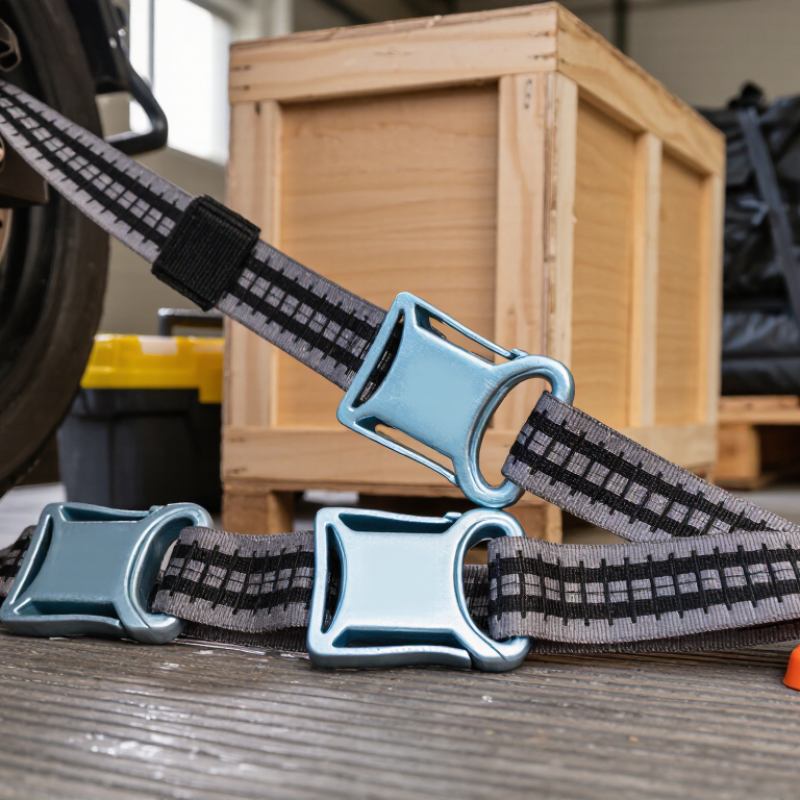
Cam buckle tie down straps suit light and medium loads that need quick adjustment. Their flat buckle grips the webbing without complex winding. They work well for boxes, garden tools, folding furniture, and small equipment. Pull the loose end firmly, then check that the buckle sits flat. These straps are fast, but excessive force can damage delicate cargo.
Ratchet buckle straps provide stronger tension for heavier or shifting loads. Their handle lets users tighten the webbing in controlled steps. They are useful for trailers, construction materials, motorcycles, and bulky outdoor equipment.
Choose a strap with a suitable working load limit, not just a high breaking strength. Add corner protectors when sharp edges touch the webbing.
Automatic retractable straps keep excess webbing inside a spring-loaded housing. They reduce loose tails and help organize vehicle interiors. They suit luggage, sports gear, and repeated daily transport. However, their compact design does not make every model suitable for heavy cargo. Read the capacity label carefully.
Inspect every strap before use. Frayed threads, crushed webbing, bent buckles, or faded sections need attention. A strap may look acceptable while hidden fibers have weakened.
I once underestimated how quickly rough metal edges could wear webbing; that mistake changed my loading routine.
Secure the buckle away from impact points, and recheck tension after a short drive. There is no perfect shortcut.
How to Choose the Right Strap Material, Length, and Load Capacity
Top Buckle Tie Down Straps for Secure Cargo
Choosing a tie down strap starts with the material. Polyester resists sunlight, moisture, and stretching, making it suitable for trailers and outdoor hauling. Nylon feels softer and absorbs shock, but it stretches more under changing loads. That movement can loosen cargo. For sharp-edged equipment, use edge protectors. A buckle should close firmly without forcing it. Test it by hand.
Length matters more than many users expect. A strap that barely reaches around the load leaves little room for safe tensioning. Measure the cargo circumference, then add enough length for the buckle and anchor points. Excess webbing should be secured, not left flapping near wheels. Too much slack is risky. I once selected a strap by vehicle size alone, which was a poor shortcut. The actual cargo shape mattered more.
Check the working load limit, not only the advertised breaking strength. The working limit should exceed the cargo weight with a clear safety margin. Consider vibration, braking, wind, and uneven roads. Inspect stitching, webbing, and buckle teeth before every trip. Replace straps with cuts, melted fibers, bent hardware, or faded labels. A clean strap is not automatically a safe strap. Follow the manufacturer’s instructions and local transport requirements, especially when securing dense machinery or unusually shaped loads.
Step-by-Step Guide to Securing Cargo with Buckle Tie Down Straps
Before loading, inspect each buckle tie down strap for cuts, melted fibers, bent hardware, or a damaged release lever. I check the anchor points too. They must be strong, clean, and aligned with the cargo. Measure the load, then choose straps long enough to cross it without twisting. Sharp corners need protective sleeves or padding.
Place the cargo evenly on the vehicle floor. Keep heavier items low and centered. Run the strap over the strongest part of the load, not across a fragile edge. Feed the free end through the buckle slot, following the buckle’s marked path. Pull the strap until it feels firm, then close the buckle completely. Leave a short tail, and secure loose webbing so it cannot flap into moving parts.
Push the cargo firmly by hand. It should not slide, tilt, or lift from the surface. I also check the buckle after a short distance because vibration can reduce tension. During one rushed loading job, I tightened a strap over a rounded box; it looked secure but shifted later. That mistake taught me to use a second strap and better contact points. Do not rely on tension alone. Recheck corners, buckles, and anchor points whenever the load changes or the journey includes rough roads. The strap should hold the cargo, not crush it.
Top Buckle Tie Down Straps for Secure Cargo - Step-by-Step Guide to Securing Cargo with Buckle Tie Down Straps
| Strap Configuration | Typical Webbing Width | Typical Length Range | Typical Working Load Limit | Recommended Cargo | Key Benefit |
|---|---|---|---|---|---|
| Cam buckle with flat hooks | 25 mm / 1 in | 2–6 m / 6.5–20 ft | Approximately 250–500 daN | Light boxes, luggage, bicycles, and small equipment | Fast adjustment and low risk of over-tightening |
| Cam buckle with soft loops | 25 mm / 1 in | 2–5 m / 6.5–16 ft | Approximately 250–500 daN | Motorcycles, painted frames, and delicate anchor points | Reduces scratching and protects attachment points |
| Heavy-duty cam buckle | 38 mm / 1.5 in | 3–8 m / 10–26 ft | Approximately 500–750 daN | Medium equipment, tools, and recreational gear | Greater webbing strength with controlled hand tension |
| Ratchet buckle with flat hooks | 25–50 mm / 1–2 in | 3–10 m / 10–33 ft | Approximately 500–2,000 daN | Pallets, machinery, motorcycles, and bulky cargo | Higher tension capability for heavier loads |
| Endless loop buckle strap | 25–50 mm / 1–2 in | 1.5–5 m / 5–16 ft | Approximately 250–1,000 daN | Bundled pipes, rolled materials, and compact packages | Creates a continuous loop without exposed hooks |
| Protective-sleeve buckle strap | 38–50 mm / 1.5–2 in | 3–8 m / 10–26 ft | Approximately 500–1,500 daN | Sharp-edged, abrasive, or painted cargo | Sleeve helps reduce abrasion and load-surface damage |
| Step | Action | Correct Method | Safety Check |
|---|---|---|---|
| 1 | Check the strap | Inspect webbing, stitching, buckle, hooks, and labels before use. | Do not use straps with cuts, burns, heavy abrasion, bent hardware, or unreadable ratings. |
| 2 | Choose anchor points | Select rated, structurally sound anchor points on opposite sides of the load. | Avoid sharp edges, exhaust components, moving parts, and weak panels. |
| 3 | Position the cargo | Place the heaviest items low and centered; block or brace items that can roll or slide. | Keep the load within the vehicle’s payload and axle limits. |
| 4 | Route the strap | Place the webbing over the load or through an approved attachment point without twists. | Use edge protectors where the strap contacts corners or abrasive surfaces. |
| 5 | Close the buckle | Feed the free end through the buckle as designed and pull the slack out by hand. | Ensure the buckle is fully engaged and the strap is flat. |
| 6 | Apply tension | Tighten until the cargo is stable; avoid excessive force that may damage the load or hardware. | Never extend a handle with a pipe or use impact tools on a buckle. |
| 7 | Secure loose webbing | Tie or stow the free end so it cannot contact wheels, roads, or moving machinery. | Leave the buckle accessible for rechecking. |
| 8 | Recheck during transit | Inspect the load and strap tension shortly after departure and at regular stops. | Stop immediately if the cargo shifts, the strap loosens, or abrasion develops. |
Common Mistakes That Reduce Cargo Strap Security
Top buckle tie down straps can secure cargo well, but small setup errors weaken the entire system. One common mistake is trusting strap tension without checking the anchor points. Solid straps cannot fix weak attachment. Inspect rails, hooks, and tie-down rings for cracks, bending, or looseness before loading. Match each strap with its marked working load limit. Never exceed that limit, even when the cargo seems light.
Twisted webbing is another frequent problem. It creates uneven pressure and may damage the strap against sharp edges. Keep the webbing flat across the load, then add edge protection where corners could cut or crush it. Some users pull the buckle excessively tight, believing more force always means better security. It does not. Over-tightening can deform packages, damage anchor points, or strain the buckle.
Loose strap tails also deserve attention. They can flap against the vehicle or catch on nearby objects. Secure the excess without tying knots that could hinder release. After driving a short distance, stop and inspect the tension again. Vibration and shifting weight can create slack. I have seen carefully loaded cargo become unstable because this check was skipped.
The honest lesson is simple: a strap system should be inspected twice, especially when weather, uneven roads, or irregular cargo is involved. Do not rely on appearance alone. Feel the tension, examine the webbing, and question any component that looks worn.
Inspection, Maintenance, and Safe Storage of Tie Down Straps
Top Buckle Tie Down Straps for Secure Cargo
Inspection, Maintenance, and Safe Storage of Tie Down Straps
A buckle strap can look strong while hiding damaged fibers. I inspect every strap before loading, especially around the buckle, stitching, and end fittings. Cuts, melted areas, crushed webbing, oil saturation, and faded warning labels require removal from service. The Commercial Vehicle Safety Alliance’s 2024 International Roadcheck data listed cargo securement among frequent out-of-service violations. That finding supports a simple lesson: visual checks are not optional.
I check the strap’s working load limit against the cargo weight and the securement plan. The Federal Motor Carrier Safety Administration requires tiedowns to meet minimum working load limits and remain properly attached. Buckles must close fully, without slipping or forced alignment. After tightening, I drive a short distance and recheck tension. I used to trust a strap because it felt tight. That was not enough. Vibration can loosen hardware, and I still occasionally miss small abrasion near the buckle.
Tips: Keep straps dry and away from direct sunlight, battery acid, solvents, and sharp edges. Store them loosely coiled in a ventilated cabinet. Do not leave wet straps inside a sealed toolbox. Mark questionable straps and isolate them until a trained person evaluates them. Manufacturer instructions and applicable transport regulations should guide final decisions.