
Effective Tips for Choosing the Right Valve Lockout Chain?

Choosing the right Valve Lockout Chain is crucial for workplace safety. Many industries rely on these essential tools to prevent accidental valve operation during maintenance. A well-selected valve lockout chain helps ensure that workers are safe and compliant with regulations.

When considering options for a valve lockout chain, start by evaluating the specific needs of your facility. There is no one-size-fits-all solution. Different environments and valve types require different approaches. Look for chains that are durable, resistant to wear, and suitable for various weather conditions. It is essential to prioritize quality over cost; a cheap chain may not provide the necessary protection.

Moreover, it’s important to consider the ease of use. If a valve lockout chain is complex to apply, workers may bypass it. This can lead to risky situations. Training employees on proper lockout procedures can help reinforce the importance of using the chain correctly. In the end, the choice you make impacts safety significantly. A thoughtful selection process can save lives and enhance operational efficiency.
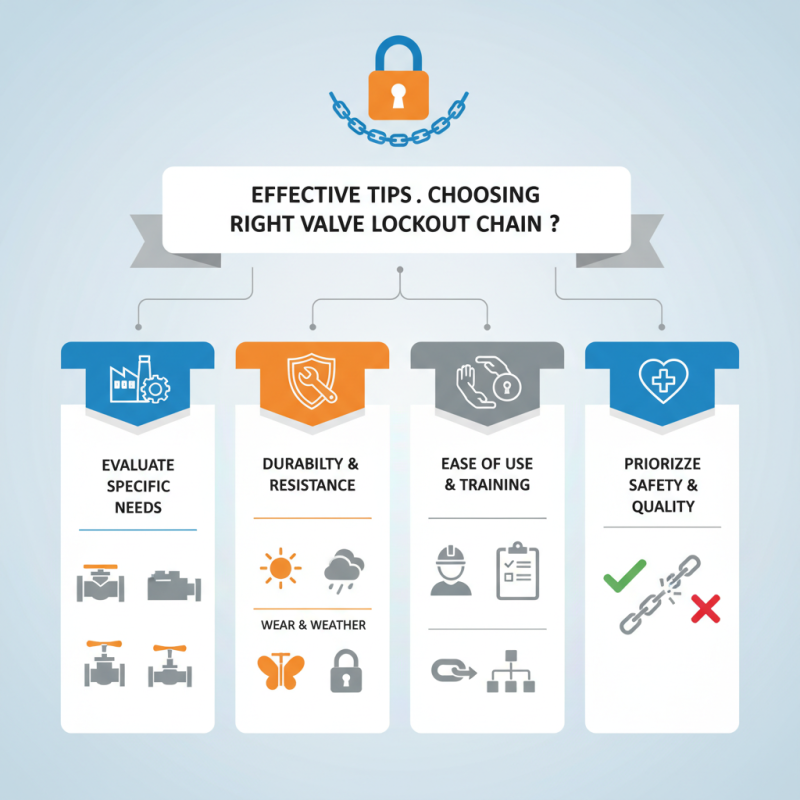
Effective Tips for Choosing the Right Valve Lockout Chain?

Understanding Valve Lockout Systems and Their Importance in Safety

Valve lockout systems are crucial for ensuring safety in industrial environments. They prevent accidental valve operation during maintenance or repair work. According to the U.S. Occupational Safety and Health Administration (OSHA), proper lockout/tagout procedures help prevent nearly 120 fatalities each year. Understanding this can significantly enhance workplace safety.

Choosing the right valve lockout chain is critical. A study by the National Safety Council emphasizes that secure lockout systems reduce the risk of injuries. Chains must be durable, resistant to environmental factors, and easy to use. Consider options like non-conductive materials for electrical safety. Many facilities overlook the importance of chain quality, leading to potential hazards.

Maintaining a reliable valve lockout system requires regular inspection. Chains can wear out, and components may degrade over time. Industry guidelines recommend checking equipment every six months. Ignoring this might create safety gaps, emphasizing the need for proactive measures. The responsibility rests on management and workers alike to ensure all systems are functional and effective.

Effective Tips for Choosing the Right Valve Lockout Chain

Feature Description Importance
Material Durable and rust-resistant materials like stainless steel or nylon. Ensures longevity and effectiveness in harsh environments.
Length Available in various lengths for different application needs. Provides flexibility for covering multiple valves or locations.
Color Coding Bright colors for easy identification and compliance. Improves safety by helping workers quickly recognize lockout devices.
Compatibility Must be suitable for various valve types and sizes. Ensures comprehensive lockout capabilities across systems.
Ease of Use Design should allow for quick and easy application and removal. Saves time and improves compliance during lockout procedures.

Key Factors to Consider When Selecting a Valve Lockout Chain

When selecting a valve lockout chain, several key factors come into play. Safety is paramount in industrial and manufacturing environments. According to a recent safety management report, nearly 40% of workplace injuries are related to improper isolation of hazardous energy sources. A reliable valve lockout chain significantly reduces this risk.

Material durability is crucial. Chains made of high-strength materials withstand harsh conditions, including extreme temperatures and corrosive substances. Companies should consider weather-resistant coatings for longevity. The average lifecycle cost of a valve lockout chain can rise substantially if it requires frequent replacements due to corrosion. Additionally, look for chains that are easy to install and remove. Ergonomic design enhances usability, reducing the time workers spend on lockout procedures.

Another critical factor is visibility. Brightly colored chains or those with reflective elements enhance recognition, leading to increased compliance in safety protocols. Research indicates that visibility can improve adherence to lockout/tagout procedures by up to 25%. Look out for options that come with clear, user-friendly labels as well. Not all chains meet the required safety standards, so verification of compliance is essential.

Types of Materials Used in Valve Lockout Chains and Their Durability

Choosing the right valve lockout chain is crucial for safety in industrial environments. One key factor to consider is the material used in the chains. Different materials offer varying levels of durability and resistance to wear and tear. Common options include steel, plastic, and nylon. Steel chains provide strength and resistance to heat, while plastic chains are lightweight and rust-resistant.

The durability of a lockout chain is essential. Steel chains, for example, can withstand harsh conditions but may corrode over time if not properly maintained. Plastic chains, on the other hand, may not be as strong but can last long in moisture-heavy environments. Nylon chains strike a balance, offering flexibility and moderate durability. When choosing a material, consider the specific operating conditions of your valves.

An often overlooked aspect is how environmental factors impact these materials. Moisture, temperature, and exposure to chemicals can affect chain performance. It’s essential to analyze your environment. This ensures that the chosen lockout chain will endure the operational demands. Many users fail to recognize these factors, leading to premature wear. Investing time in choosing the right chain can enhance safety and efficiency.

Industry Standards and Regulations for Valve Lockout Devices

When selecting a valve lockout chain, it is crucial to understand industry standards and regulations. Regulatory bodies set guidelines to ensure safety in workplaces that utilize hazardous energy sources. Compliance with OSHA and ANSI standards is essential. These regulations outline the requirements for lockout/tagout devices, including valve lockout products. Proper adherence guarantees safe operations and protects workers from potential hazards.

To choose the right valve lockout chain, consider the material and durability. Stainless steel chains are highly resistant to corrosion and provide enhanced longevity. The right design allows easy visibility and identification. Check if the chain can accommodate various valve sizes. This ensures versatility across different equipment.

Always remember to assess your workplace needs. Not all environments are the same. Document your selection process and evaluate the effectiveness of your lockout systems regularly. Additionally, train employees on proper usage and the importance of compliance. Reassess and update practices as regulations evolve to maintain safety.

Best Practices for Implementing Valve Lockout Procedures in the Workplace

Implementing effective valve lockout procedures is critical for workplace safety. According to the Occupational Safety and Health Administration (OSHA), failures in lockout/tagout procedures account for about 10% of workplace fatalities. Clear guidance and training can help mitigate these risks.

Training should emphasize the importance of all employees understanding lockout procedures. Regular refresher courses can help keep safety top of mind. In one study, workplaces that conducted regular training sessions saw a 30% reduction in incidents related to machinery. Each employee must be involved. Creating a culture of safety is essential.

Lockout chains should be durable and clearly marked. Use chains that can withstand harsh environments. More importantly, require periodic checks for wear and tear. This accountability ensures compliance and reinforces a safety-first environment. Periodic audits also help identify gaps in procedures. These audits can reveal that some employees might overlook essential steps. Addressing these gaps means maintaining a consistently safe workplace.