7 Essential Tips for Choosing a Mill And Lathe?
Choosing a Mill And Lathe is not a simple matter of comparing prices. The right machine must match your materials, workspace, accuracy goals, and practical experience. A compact benchtop model may suit small aluminum parts, while a heavier machine handles steel with greater stability. The difference becomes obvious when vibration marks appear on a finished surface.
I have learned that specifications can mislead when viewed alone. Motor power matters, but spindle speed, torque, rigidity, travel, and tooling support matter just as much. A machine with impressive numbers may still disappoint if replacement parts are difficult to find. Check the manufacturer’s documentation, warranty terms, service network, and user feedback from experienced operators. Reliable evidence is more useful than polished advertising.
Safety deserves equal attention. Look for guarded moving parts, an accessible emergency stop, and controls that feel deliberate rather than fragile. Measure your doorway and workbench before ordering. I once underestimated the space needed around a machine, creating an awkward setup that limited maintenance access. That mistake was avoidable.
These seven essential tips will help you evaluate each option with clearer judgment. They cover machine size, construction quality, precision, tooling, controls, maintenance, and total ownership cost. Some recommendations may not fit every workshop. That is the point. A careful choice begins with honest limits, realistic projects, and room to improve. Take your time. The best Mill And Lathe is not always the largest or cheapest. It is the one you can operate confidently, maintain consistently, and use accurately for years.
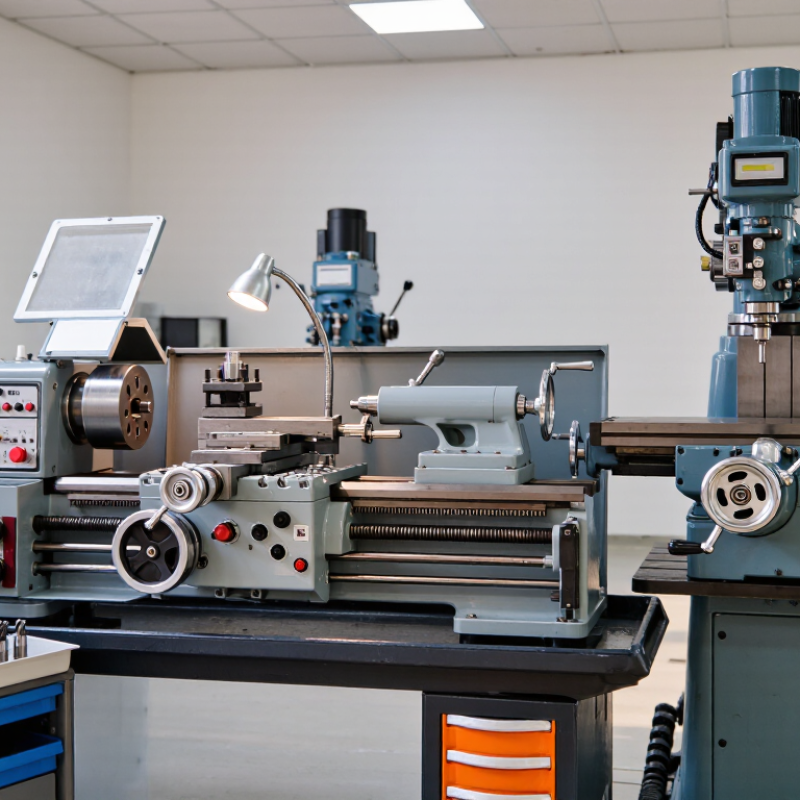
Define the Machining Tasks and Materials
Before choosing a mill and lathe, list the actual parts you plan to make. A flat fixture plate, a slotted bracket, and a turned shaft demand different setups. Note the largest workpiece, tightest tolerance, surface finish, and expected batch size. Be specific. “Small parts” is not a useful specification. A 150 mm shaft may fit a lathe’s stated swing but still collide with its chuck or toolpost.
Material matters just as much. The World Steel Association reported 1.89 billion tonnes of crude steel production in 2023, while the USGS Mineral Commodity Summaries 2024 reported about 72 million tonnes of primary aluminium production. These figures show how widely used metals differ in scale, not how easily every grade cuts.
Steel can impose higher cutting forces; aluminium often needs sharp tools and effective chip clearance. Check the exact alloy, hardness, and stock condition before selecting spindle power, tooling, and workholding. A machine that handles mild steel may struggle with hardened stock. That detail is easy to miss.
Write down a sample job and ask whether the machine can hold it securely, reach every feature, and remove material at a realistic feed rate. Include the boring bar, vise, chuck, and workpiece overhang in your clearance check. If the material list is still uncertain, leave room for tooling changes. That costs more upfront, sometimes unnecessarily—but guessing can cost more later.
Choose Between a Mill, Lathe, or Combination Machine
Choosing between a mill, lathe, or combination machine starts with your actual work. A lathe rotates the material for shafts, bushings, and threaded parts. A mill moves a cutter across fixed material for slots, faces, and pockets. Write down five projects you expect to make. Be specific. A small metal bracket needs different capacity than a long steel shaft.
Tip: Match the machine to your largest realistic workpiece. Check swing, center distance, table travel, spindle speed, and motor power. Leave room for fixtures and safe hand movement. I once underestimated workholding space, and setup became frustrating. The machine still worked, but productivity suffered.
Tip: Choose a combination machine when space and budget matter most. It can handle basic turning and milling in one footprint. However, changing between operations takes time, and each function may feel limited. Choose separate machines when accuracy, repeatability, or frequent production matters. Read the technical manual before buying. Confirm rigidity, measurable tolerances, tool availability, and service support. My first comparison focused too heavily on price; that was a mistake. Noise, vibration, and awkward controls often matter more during real use.
Tip: Test the workflow, not only the specifications. Imagine cutting a shoulder, drilling a hole, and checking it with a caliper. If the sequence feels cramped, reconsider the machine. A practical choice should fit your projects, workspace, skills, and patience.
Match Machine Size and Capacity to Your Projects
Choosing a mill or lathe starts with the parts you actually plan to make. Measure your largest workpiece, then allow room for clamps, tool access, and safe handling. A lathe’s swing and distance between centers limit the diameter and length it can turn. A mill’s table size and travel determine how much material it can reach without repositioning. Check those figures against real projects, not optimistic guesses.
Tip 1: Bring a sample part drawing to the machine specifications. For a long shaft, compare its length with the lathe’s usable distance between centers. For a plate, check the mill’s X and Y travel, including space needed for a vise. A few extra inches can prevent awkward setups. Too much capacity, though, may mean a machine that takes valuable floor space.
Tip 2: Match capacity to material and cutting demands. A compact machine may handle small aluminum parts well but struggle with heavier steel cuts. Look for a rigid frame, suitable spindle power, and a workholding setup that fits your parts. Check the machine’s weight and shop access before delivery; doorways can be less forgiving than spec sheets. I’ve seen capacity figures treated as guarantees, which is worth questioning. Consider your likely next project, but don’t pay for a size you cannot use.
Evaluate Motor Power, Speed Range, and Precision
7 Essential Tips for Choosing a Mill and Lathe: Evaluate Motor Power, Speed Range, and Precision
Motor power should match the material, cutter size, and expected depth of cut. More power is not automatically better. An oversized motor can increase purchase cost, heat, and energy waste. The U.S. Department of Energy reports that motor-driven equipment uses roughly 70% of industrial electricity. Ask for continuous power, not only peak horsepower. A practical test is simple: run a demanding cut and watch for stalled rotation, excessive vibration, or rising temperature. Real shop conditions expose weaknesses quickly.
Speed range matters because aluminum, steel, plastics, and small tools need different cutting speeds. Check the lowest stable speed as carefully as the maximum speed. A high top speed means little if the spindle vibrates at 6,000 rpm. The International Organization for Standardization’s ISO 230-2 test method evaluates positioning accuracy and repeatability, useful measures when comparing machine specifications. Request test results under stated conditions. Numbers without test conditions can mislead.
Precision is more than a small digital display. Examine backlash, spindle runout, thermal drift, and axis repeatability. A 2023 industry survey from the National Institute of Standards and Technology emphasizes measurement uncertainty as a central manufacturing concern. That detail is easy to overlook. I would also inspect a sample cut, measure it twice, and leave room for operator error. My first choice might still be wrong if maintenance quality is poor. Precision depends on habits, not hardware alone.
7 Essential Tips for Choosing a Mill and Lathe
Compare motor power, maximum spindle speed, and positioning accuracy across common machine-tool categories. Values are representative industry ranges and should be verified against the actual machine specification.
Selection tips: Match motor power to the material and cutting depth; choose a speed range suited to both large and small workpieces; prioritize rigidity and low runout; check positioning accuracy and repeatability; confirm spindle and tooling compatibility; evaluate work envelope and travel; and consider serviceability, safety features, and total operating cost.
Compare Features, Safety, Maintenance, and Total Cost
Choosing a mill and lathe requires more than comparing price tags. Tip 1: Match the machine’s working envelope to your largest planned project. Check swing, travel, spindle speed, power, and tooling compatibility. Tip 2: Inspect controls and rigidity. A stiff frame, smooth handwheels, and minimal spindle play usually improve accuracy. Tip 3: Treat safety features as essential. Look for guards, emergency stops, secure workholding, and clear access to controls. Test their position before purchase.
Tip 4: Ask about maintenance access. Can you reach lubrication points without removing panels? Check manuals, service intervals, replacement parts, and adjustment procedures. Tip 5: Examine real operating costs. Include tooling, coolant, electricity, calibration, delivery, training, and installation. A low purchase price can become expensive after several small additions. Keep written estimates. They expose forgotten costs.
Tip 6: Request a practical demonstration using a similar material and cut. Watch for vibration, heat, finish quality, and operator effort. Tip 7: Compare support and documentation, not only specifications. Reliable guidance can prevent costly setup errors. I once underestimated tooling costs, and the machine sat unused for weeks. That mistake still influences my buying checklist. Leave room for uncertainty, too. Your first project may demand different tooling, safer speeds, or more maintenance than expected.
Related Posts
-
Top Lathe Machine Tools for Global Buyers?
-
What Are the Top Mill Lathe Types in 2026?
-
Advantages of Using a Manual Milling Machine in Modern Manufacturing
-
Top 10 Milling Equipment Manufacturers from China at the 137th Canton Fair
-
5 Proven Best Milling Equipment Options for Your Manufacturing Needs
-
7 Essential Tips for Choosing the Right Milling Machine Tools